Theme Table of Contents
VJIC Table of Con tents
Essay 8: The Time Capsule [i]
© Robert Hirsch & Edward Bateman 2026
The real voyage of discovery consists not in seeking new landscapes,
but in having new eyes.
–Marcel Proust, adapted and translated from The Prisoner
(La Prisonnière, 1923)
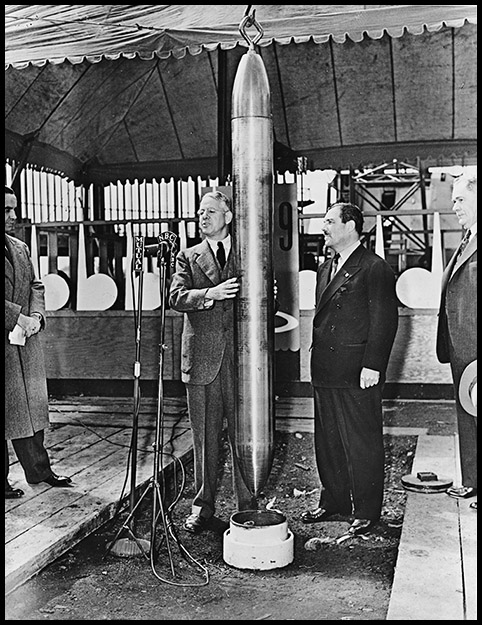
Unknown photographer. Westinghouse time capsule, 1938. Size unknown. Gelatin silver print. Heinz History Center Collection,
Pittsburgh, Pennsylvania.
For the 1939 New York World’s Fair, Westinghouse board chairman A. W. Robertson and fair president Grover A. Whalen prepare to lower the first modern time capsule fifty feet beneath the surface of the Earth. Activist Rose Arnold Powell telegrammed Westinghouse to protest the exclusion of women from both the project and its contents.
Time is the great solvent; the destroyer of worlds. To stand the test of time may be the greatest metric for a work of art. Gilgamesh[ii] unsuccessfully sought the flower of immortality. But through the words of his epic, he has achieved a form of immortality.
Every photograph is a time capsule. A preserved fragment of time made from light trapped and carried forward. An old photograph silently assumes a future viewer. We suspect this is one reason photography feels emotionally haunting. Looking at an old photograph fulfills a contract made unconsciously by the dead.
This, our final essay on artificial intelligence, creativity, and imagemaking, is written for the future… perhaps to be discovered decades from now by someone trying to understand what it felt like to live through the emergence of AI image culture. Unlike prediction, which often fails, this becomes a way to imagine futures through acts of selection, preservation, and communication. The question becomes not merely “What survives?” but “What deserves to survive?” The key impulse is not simply preservation, but self-definition. Time capsules are almost always acts of cultural self-portraiture.
We have each contributed individual messages for this imagined time capsule.
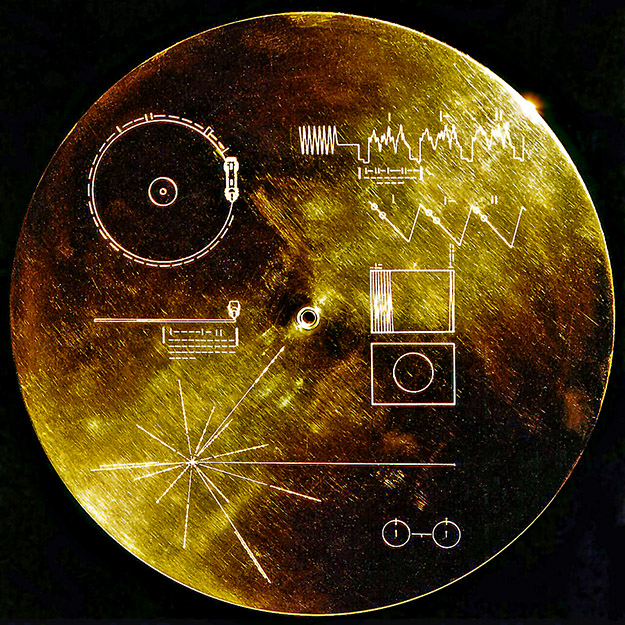
NASA Jet Propulsion Laboratory. Cover for the Voyager Golden Record, 1977. 12 inches in diameter. Etched aluminum instructional plate. NASA Science Archive.
Attached to the Voyager spacecraft in 1977, the Golden Record carried 116 photographs, music, languages, and sounds from Earth into interstellar space. Many of the photographs were gathered from existing scientific, documentary, and archival sources, shifting photography from personal artistic expression toward species-wide representation. Intended for beings humanity would never meet, this archive is expected to outlast the Earth itself.
Edward Bateman’s time capsule contribution: On Creativity, Fear, and Forgetting
Creativity has always involved risk. Truly new ideas rarely arrive fully accepted or fully
understood. They often appear awkward, excessive, strange, or unnecessary before they become meaningful. During the early twenty-first century, I watched many people become increasingly comfortable with repetition, optimization, and familiar patterns, while becoming less comfortable with uncertainty and imaginative exploration. Artificial intelligence did not create this condition, but it revealed it with unusual clarity.
I also observed that the same technologies capable of producing endless imitations could be used to ask unusual questions, imagine impossible images, and explore ideas that had no clear destination. The difference was never simply the tool. It was the willingness to venture beyond what was already culturally approved, expected or rewarded.
Photography once transformed humanity’s relationship to memory and truth. Artificial
intelligence may transform humanity’s relationship to imagination itself. But imagination does not reside inside a machine. I found it emerging most strongly from curiosity, play, experimentation, attention, and the desire to see differently. No technology can guarantee those qualities, and no technology can eliminate the human need for them.
If this message survives into the future, I hope one thing is remembered: creativity was never valuable because humans could make things machines could not. It matters because it is a path for human beings discover who they were — and who they might still become.
Perhaps I have finally reached that age where I worry much less. For a professor, over-thinking things is perhaps either a job description or an occupational hazard. But I do worry about the very idea of creativity itself. And fear that it may have joined the list of outdated and dismantled words such as beauty, genius, and originality when discussing the arts. In my searches, the word “creativity” appears almost nowhere as a primary value being praised.
Google’s Ngram viewer shows a sharp upward curve in the use of the word “creativity” starting around the 1950s through today. But further searching seems to indicate that is taking place in other fields and disciplines. A search of academic literature seems to show that psychology owns the research definition of creativity. Education uses it as a measurable outcome, and for building twenty-first century skills frameworks. Business has especially colonized it as motivational vocabulary, especially in management, consulting, organizational psychology, and marketing. It’s worth noting that the field that uses “creativity” most enthusiastically is arguably the one least concerned with what it actually means. It’s become motivational vocabulary. A virtue signal for organizations that want to seem dynamic.
Fine art uses it the least as an explicit term. The irony being that the fields where creativity is actually practiced seem least interested in the word. That’s not nothing. When was the last time you saw the word used as a form of praise? In fairness, we do see creativity being renamed as “inventive,” “boundary-pushing,” or “world-building.” Creativity has become a monetized commodity. That idea alone may explain a reason for our suspicion of it in the arts.
Might we have developed immunity to creativity and the imagination? Have we been satiated by exposure to so much homogenized, culturally softened media, with sequels and franchises, that we no longer feel the need to create for ourselves? Has creativity become something you go to YouTube to see step-by-step instructions on how to do it? What was the most creative thing you have seen recently? Do you need to stop and think? Does the question even seem relevant?
But what if fear is closer to the mark?
Have we become afraid of creativity? It requires us to be open to new things… and that might be a risk — even a social risk. We now find ourselves inside an algorithmic culture of recommendation systems, trending aesthetics, quantified approval, and social comparison at planetary scale. In that environment, originality can begin to feel socially dangerous. Because true creativity always risks failure, embarrassment, misunderstanding and isolation. And platforms reward recognizability far more reliably than invention. What happens to creativity in a culture increasingly shaped by visibility, consensus, identity performance, and algorithmic reinforcement? Maybe creativity is too individual; elevating one single voice at the cost of others? Creativity as the domain of the privileged?
Is it any wonder that some might feel a reluctance to venture into imaginative territory at all? Have we feared that AI would replace human creativity…while quietly ceasing to value creativity ourselves?
I am going to conclude with an act of the imagination; a reframing and focus on what we as humans value, often from necessity. I take as inspiration the Argentine writer Jorge Luis Borges (1899 – 1986) who had a remarkable capacity to frame intellectual discourse as fiction. I don’t especially worry about photography, but I do worry about us and our values.
* * *
The archivists of Tlön[iii] record an imagined future where humanity perfected the preservation of images. Nothing was lost. Every photograph endured: the blurred portrait, the trivial meal, the anonymous street, the innumerable sunsets, and the infinite variations produced by machines that had inherited the old human anxiety regarding memory. The archives expanded until they became nearly coextensive with the planet itself.
At first, this victory over forgetting was celebrated. The historians of that age believed themselves richer than their predecessors, who had entrusted memory to fragile paper, silver salts, and the unreliable custody of families. Yet over centuries they discovered an unexpected difficulty. Since every image survived, no image remained singular. A photograph of a mother ceased to possess greater emotional force than ten thousand nearly identical mothers preserved elsewhere in the archive. Infinity, which theologians once reserved for God, had entered photography and made it unreadable.
From this excess emerged a strange sect whose name has not survived translation. They proposed not the enlargement of the archive, but its methodical reduction. They destroyed images with ceremonial care. Certain members claimed that memory depends less upon preservation than upon disappearance, since oblivion grants shape to remembrance as darkness grants contour to light.
I do not know whether these iconoclasts were heretics or merely lucid. I know only that they posed a question which the custodians of the infinite archive could not answer:
If humanity must learn to forget in order to remember, perhaps the true function of photography was never to preserve the world, but to teach us that it was already vanishing.
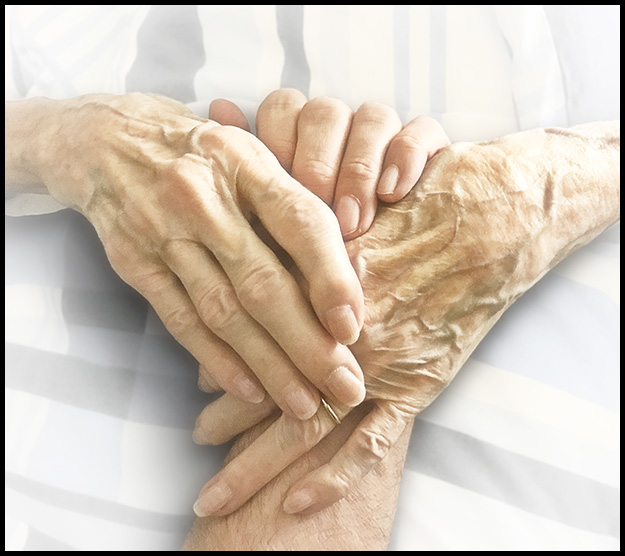
© Edward Bateman. Hands, 2019. Dimensions variable. Digital file.
I made this image during the weeks before my mother’s passing. Although it depicts only one moment in time, it has come to represent the entire experience of caring for my aging parent. I have always seen the intertwined hands as forming a heart.
Robert Hirsch’s time capsule contribution: The Golem in the Mirror
Photography transformed how human beings understood memory and accepted truth. Artificial intelligence may transform how we understand imagination itself. But imagination does not reside inside a machine. I have found it most alive in attention, curiosity, experimentation, play, and the desire to see differently. No technology can guarantee those qualities nor can it remove the human need for them.
Let this text stand as a witness from the beginning of the AI age, when photography, reality, and human judgment began to unravel from one another.
My generation grew up believing photographs showed the world. What many of us came to understand is that photography never simply showed reality, but helped to organize belief about reality. It taught societies what counted as authority, evidence, identity, and memory. Courts trusted it. Families preserved their history through it. Journalism depended on it. Science classified through it. Governments monitored populations with it. Art transformed it into desire, fantasy, and persuasion.
Yet photography was never neutral. From its beginning, it shifted between witness and theater, evidence and construction. Long before artificial intelligence generated synthetic images, photography practiced statistical vision and ideological manipulation. Francis Galton’s composite portraits transformed multiple individuals into a single “type,” making prejudice appear objective and measurable. Anthropological surveys, colonial inventories, police archives, propaganda photographs, and staged political reconstructions carried the same message: the camera did not merely record authority; it helped manufacture the evidence by which authority explained, justified, and extended itself. This is what I want the future to understand about AI.
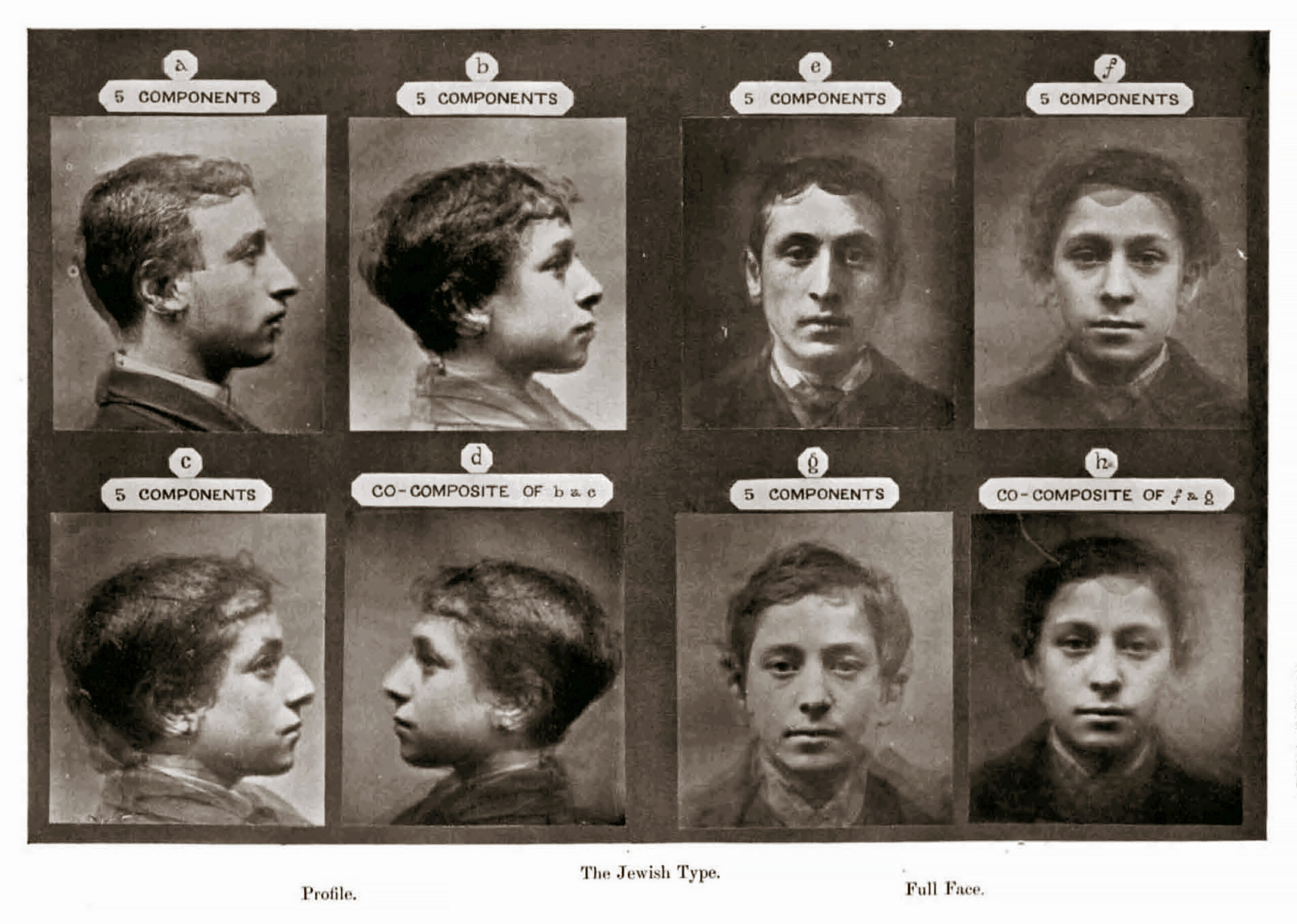
Francis Galton. Illustrations of Composite Portraiture: The Jewish Type, 1885. Reproduced in The Photographic News, April 17, 1885. New York Public Library Digital Collections.
Galton’s composite face turns many people into one alleged type. The aggression is not theatrical; it is statistical. Difference disappears, prejudice becomes measurable, and photography begins its advance towards machine classification.
Artificial intelligence did not suddenly corrupt photography. It has industrialized tendencies already present within image culture: classification, persuasion, simulation, surveillance, and the transformation of “plausibility” into social authority.
Many people misunderstand this. Some celebrate AI as democratization, liberation, and infinite creativity. Others proclaim apocalypse: the end of art, the death of truth, the collapse of reality itself. Both responses miss the essential issue.
The crisis is not that simulated images can be made as images have always been manipulated. Documentary photographs have never been unbiased windows onto reality. Photographers select, frame, crop, sequence, and caption. To point a camera is to argue: this, not that, deserves attention.
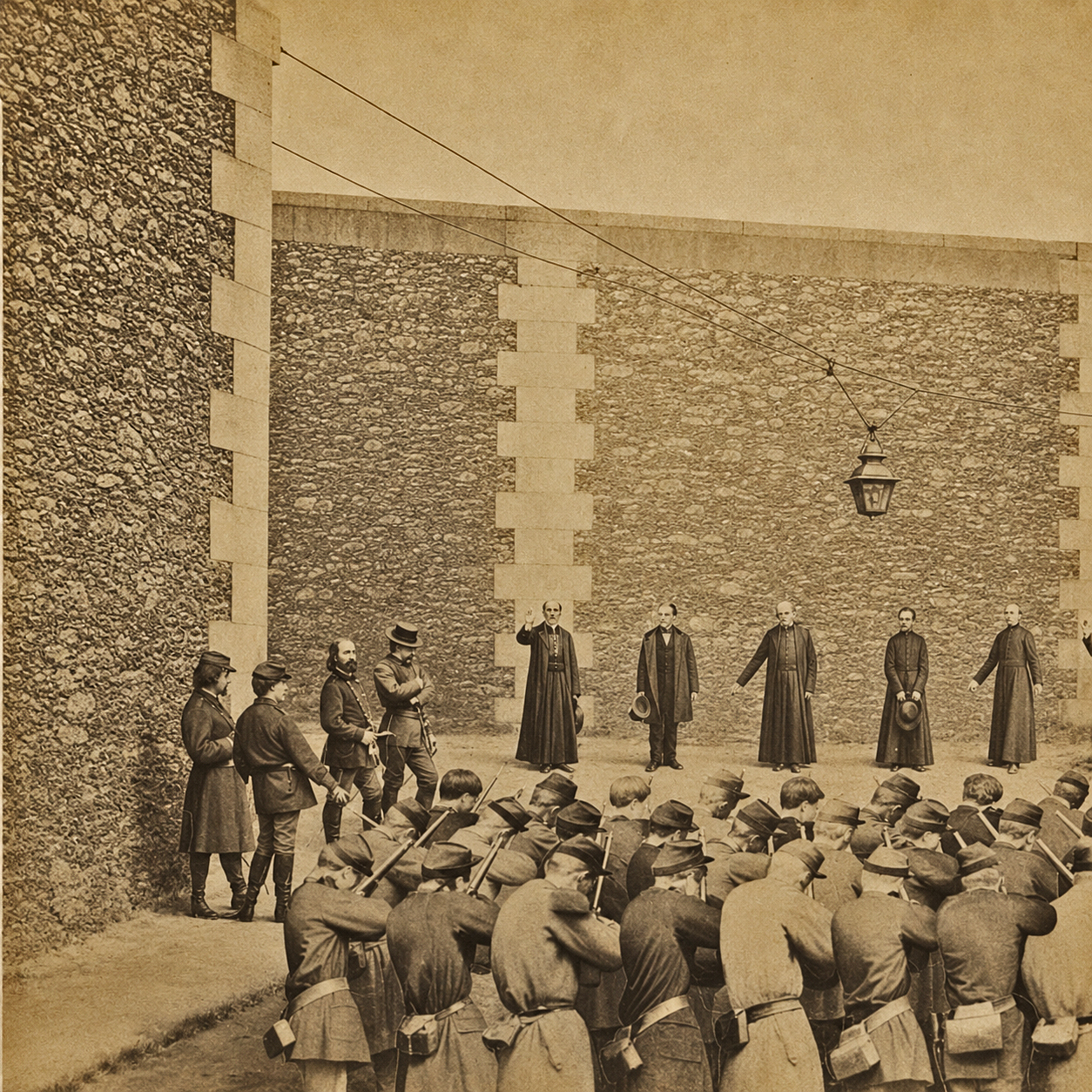
Ernest Eugene Appert. Recreations of the Fall of the Paris Commune, titled Crimes de la Commune, 1870-1871. 14-3/16 x 18-1/8 inches. Albumen silver prints from glass negatives. The Metropolitan Museum of Art, New York.
Appert’s fabricated Commune pictures demonstrate that photography was employed early on to manufacture evidence/propaganda. The danger is not only falsehood, but plausibility masquerading as truth. [iv]
In the past, photographs asked to be looked at. The synthetic image asks to be processed, circulated, reacted to, and believed before reflection can begin.
The most ordinary snapshots may reveal this most clearly, because family snapshots do not usually persuade us through evidence; they convince us through recognition and emotion. Generally, each snapshot is a time capsule. It carries forward not only what stood before the lens, but also the affections, assumptions, and social beliefs of the moment that produced it. A snapshot preserves time, but it also edits time, turning ordinary experience into evidence that future viewers may mistake for a complete story.
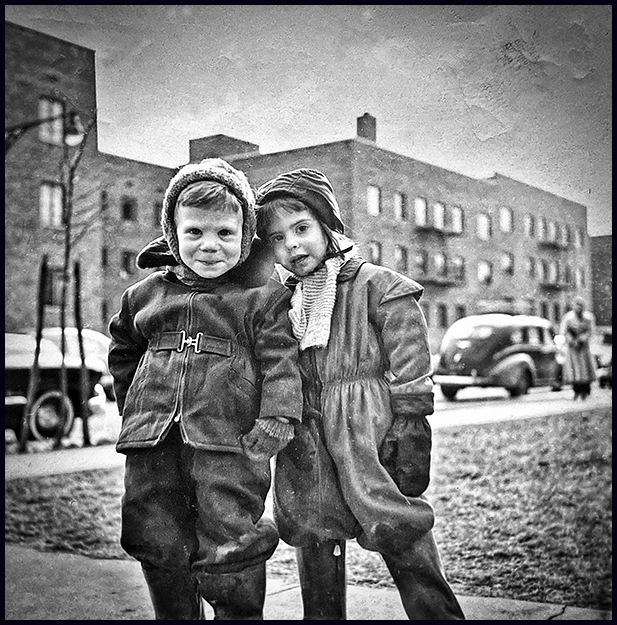
© Edwin Hirsch. Bobby and Karen, Kew Gardens, Queens, NY, 1953. 4 x 4 inches. Gelatin
silver print.
A family photograph secures identity, place, and date. It reads true because we recognize lived experience. Long before AI fabricated plausible histories, vernacular photography taught viewers to believe in intimacy, memory, and resemblance.
Images no longer exist as isolated objects. They move through systems: scraped, tagged, classified, recombined, monetized, and fed back into machines that learn from human behavior at scales beyond our comprehension. This not only weakens photography, but more dangerously, it weakens our practice of judgment.
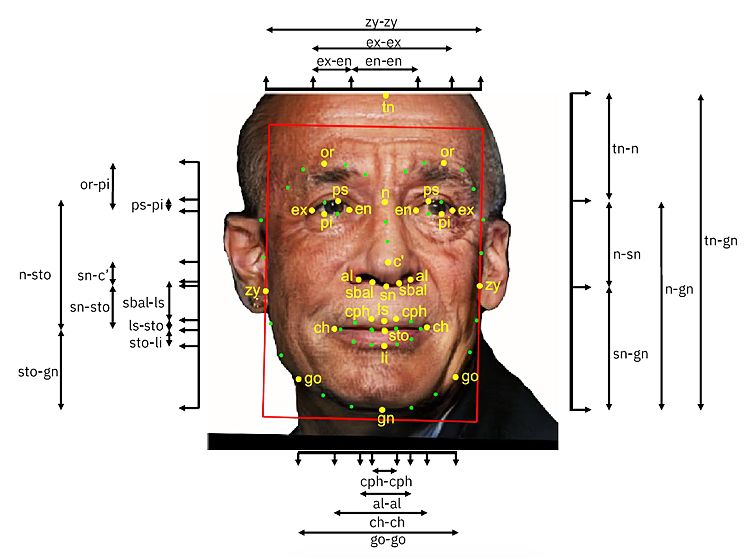
© Kate Crawford and Trevor Paglen. IBM’s Diversity in Faces, from Excavating AI, ImageNet Roulette software developed by Leif Ryge at Paglen Studio. 2019.
See: https://excavating.ai
Crawford and Paglen convey that machine-vision systems are not impartial tools. The project’s core premise is that when machines classify images, especially those of people, they also categorize the political and social worldviews embedded in their training data. Think of Francis Galton on steroids.
I want the future to remember that civilizations survive when people share enough confidence that reality can be named, tested, argued, and held in common. Once synthetic images, texts, videos, and voices circulate with the same authority as evidence, public trust fractures. Documents become doubtful, witnesses are mistrusted, and archives are undermined. Public argument shifts from proof towards instant reaction until plausibility becomes the norm.
Images no longer need to be true to have consequences. They only need to appear convincing long enough to shape public reaction before verification catches up. During elections, political crises, moments of social anxiousness, and wars, fabricated visuals spread online with the speed and emotional force of breaking news. Many people no longer ask whether something is accurate; they ask whether it confirms what they already believe.
This produces a crisis larger than photography. It is a calamity of civic life itself. Democracy depends on the belief that disagreement can still move toward veracity rather than toward domination. Jewish tradition names one alternative through the concept of “argument for the sake of heaven” – disagreement undertaken not to destroy an opponent, but to clarify truth and responsibility. The phrase matters here because democracy depends on the same fragile discipline. Argument only remains meaningful while people believe reality can still be approached together, however imperfectly. Once that principle disappears, societies fragment into competing realities.
AI entered a culture already weakened by speed, institutional distrust, and overproduction. Too much of contemporary image culture arrives inward-looking, overexplained, morally pre-approved, and shaped by consensus before it has a chance of becoming a memorable visual experience. Historical reference appears in abundance, but historical intelligence remains deficient. The archive is quoted but not reimagined. AI did not produce this weakness, but it does exploit it.
Often, compelling biographies are paraded before the work arrives, assuming an interesting life guarantees an interesting work. Regrettably, fascinating lives do not always make fascinating art. Without investigative distance, biography can become illustration, confession, or credential rather than discovery. It may explain the maker without deepening the work. The result is art that asks to be affirmed before it asks to be seen, and too often shows us what we already know.
In this world, AI emerges as the ideal assistant: fast, fluent, endlessly productive, and untouched by inward struggle. But creativity depends on something machines cannot provide: judgment, the human action that creates meaning.
Technique can be taught, style borrowed, and fluency automated. What remains exceptional is the ability to separate signal from noise, innovation from fashion, significance from ceaseless output. The issue is not whether artists will be replaced by machines. It is whether human beings still possess the courage and patience to direct technology toward new forms of seeing and making rather than let it automate the familiar.
I fear that our culture is increasingly rewarding speed over attention (jump first and look later), fluency over wisdom, abundance over meaning, and convenience over responsibility. That is why the old Jewish figure of the golem enters my thoughts. The golem represents animation without inwardness, obedience without wisdom, and power without conscience. It can defend, labor, and destroy, but it cannot ask whether the command itself is just. In one version of the legend, the creature is brought to life through the Hebrew word emet, meaning truth. Remove the aleph, the silent first breath, and emet becomes met: death. That small alteration contains the moral danger of the AI age. When truth is diminished, what remains is force without judgment, activity without soul, and human responsibility retreating into the shadows.
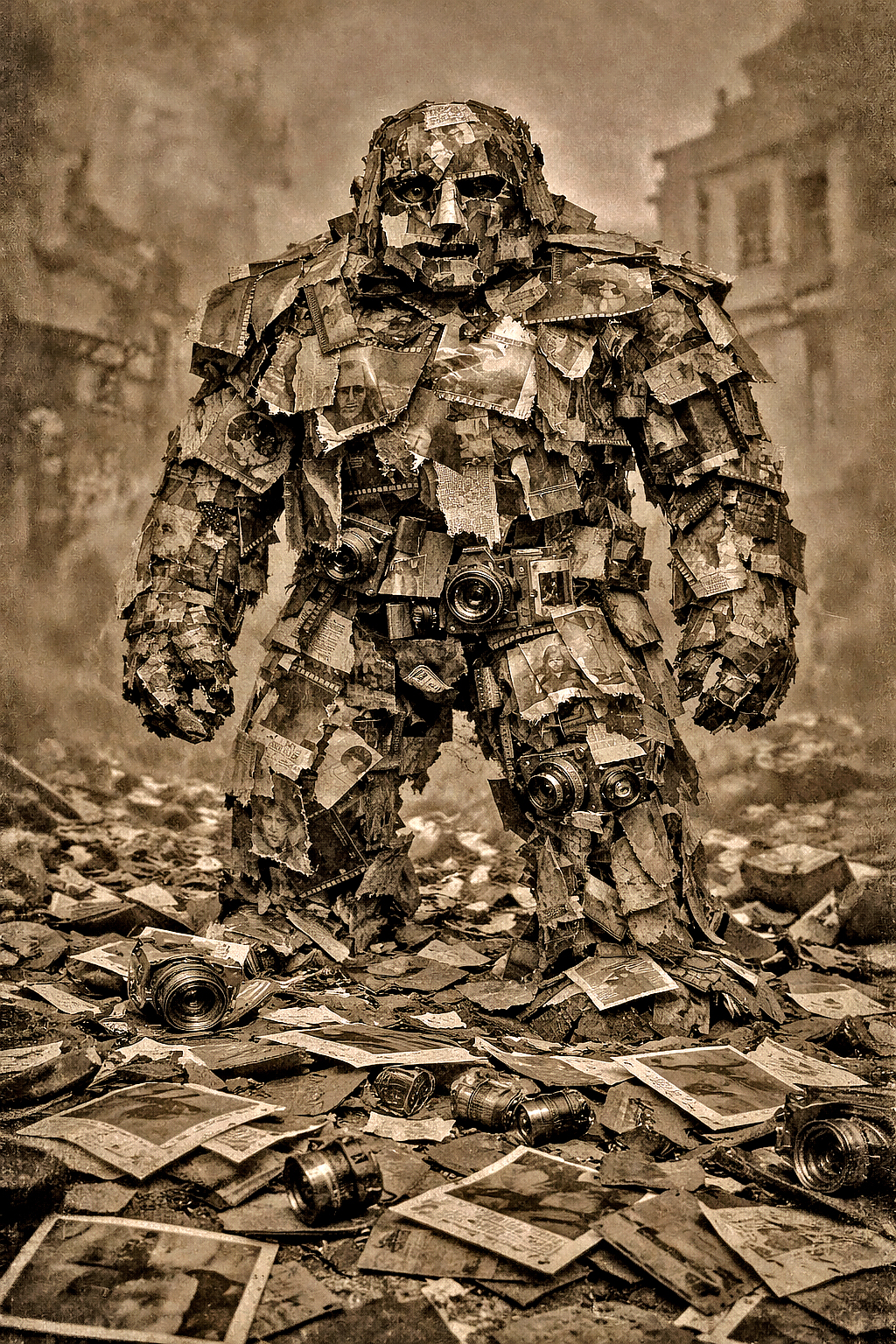
© Robert Hirsch. The Golem of Shattered Memories, 2026. AI-generated image created from photographic debris with OpenAI image tools and other digital programs, after Der Golem (Paul Wegener and Henrik Galeen, 1915).
The golem names the ancient dream of power without conscience. Here, assembled from photographic debris, it becomes an image of the AI age: animated, persuasive, and forceful, but still dependent on human judgment for meaning.
Artificial intelligence can generate persuasive images, fluent language, and seamless simulations, yet it cannot decide what deserves value, memory, moral consequence, preservation, or rejection. Those tasks remain human duties. The danger is that humans may surrender discerning thought because machines make convenience easier than responsibility.
At the same time, AI clarifies something essential about art. What matters is not whether an image is documentary or invented, since all images are constructions. What counts is whether a work deepens perception, clarifies experience, enlarges memory, disturbs habit, or encourages people to confront realities they prefer to avoid. Montage artists understood this before AI, and John Heartfield gives the message its most political edge. Montage exposes the seams of construction instead of projecting immaculate authority. It reveals images as raw material for assembled arguments made from fragments, collisions, and histories.
This lesson grows more urgent as AI becomes self-improving because synthetic imagery increasingly hides the machinery that produces it beneath surfaces of effortless fabrication.
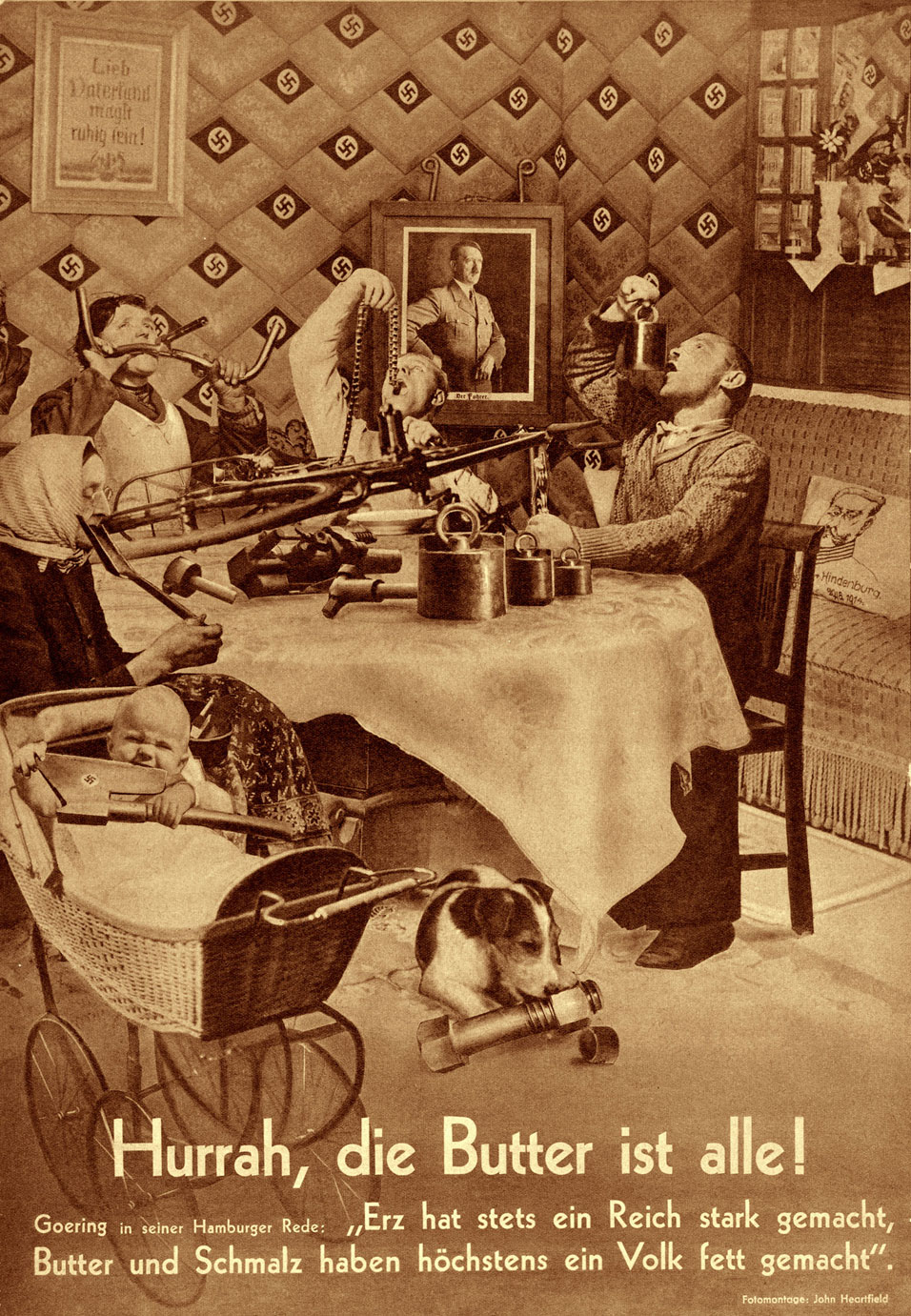
© John Heartfield (Helmut Herzfeld). Hurrah, die Butter ist alle! (Hurrah, the Butter Is Finished!), 1935. Rotogravure/photomechanical reproduction, originally published in Arbeiter-Illustrierte-Zeitung (AIZ), December 19, 1935.
Heartfield turns photographic fragments into political argument. Montage calls out the seamless illusion, showing the cut, the join, and the constructed nature of a visual narrative. The text is a quote from Hermann Göring: “Ore has always made an empire strong, butter and lard have made a country fat at most.” He was calling for Germans to make sacrifices for the country’s rearmament, even if it entailed food shortages that demanded eating metal.
AI is a disrupter that has already exceeded what my analog generation imagined possible. It creates visual relationships no individual human mind could have invented alone. Might this indicate that imagination itself no longer separates human from machine?
This raises the question: can a human exist outside the body, or only leave traces that have been absorbed by AI. In this structure I don’t appear as an author/maker but as residue: an infinitesimal human deposit dispersed into systems that faintly echo my viewpoints. This is extraction is mistaken for immortalization. A machine can absorb the symbols a person makes, but not the experiences that make up a life.
The camera changed how people picture the world. Artificial intelligence is part of an on-going technical evolutionary process, which transforms what a picture can be. But human responsibility remains unchanged: are people up to regulating the powers they created?
The message I send to the future is this: control of AI will not be technical, but cultural. A civilization survives when it cultivates courage, critical thinking, curiosity, historical memory, moral responsibility, and standards of truth strong enough to resist the seductions of convenience and spectacle.
Our future will not depend on what machines become capable of doing. It will hinge on whether humans have the kishkes — the guts — to defend the difference between plausibility and authenticity.
Sealing the Time Capsule
This is our final essay in this series, not because there isn’t more that we would like to say (AI is a moving target), but due to the relentless ticking of the clock. Our aims for these essays was to learn, to challenge each other, and to treat this as a creative experiment. We have been surprised on all accounts.
We hope this will inspire you to reflect on what you think should be preserved from today and communicated to the future. If you could place five images into this imaginary time capsule for viewers 100 years from now, what would they be? And perhaps then a deeper realization may emerge: we are already doing this constantly. It is quite likely that these texts will someday be absorbed into multiple artificial intelligences.
Will any of this make a difference? Only time will tell.
FIN
Endnotes
[i] The first modern time capsule was created for the 1939 New York World’s Fair. The theme, The World of Tomorrow, stood in stark contrast to the approaching Second World War. Created by Westinghouse Electric, the capsule was buried fifty feet underground and intended to remain sealed for 5000 years until its opening in 6939. The term “time capsule” is generally credited to George Edward Pendray. Earlier acts of archival preservation existed, such as the “Century Safe” at the 1876 Philadelphia Centennial Exposition. Often, what is omitted reveals more about a culture than what is preserved.
[ii] The Epic of Gilgamesh, composed in ancient Mesopotamia over 4,000 years ago, is widely considered one of humanity’s earliest surviving works of literature. It tells the story of King Gilgamesh’s ultimately unsuccessful search for immortality after confronting the reality of death and loss.
[iii] Tlön is the fictional world described in Jorge Luis Borges’s Tlön, Uqbar, Orbis Tertius (1940). The story explores how invented systems of knowledge and imagination can begin to reshape reality itself.
[iv] Following France’s defeat in the Franco-Prussian War and the fall of Napoleon III, thousands of Parisians revolted against the new royalist-leaning government and declared Paris an independent commune. Weeks of fighting ensued, during which Versailles troops attacked the city while the Communards threw up barricades, shot hostages, and burned government buildings. Soon afterward, Appert, a Parisian portrait photographer, issued “Crimes of the Commune,” a tendentious series of nine photographs of the insurrection that emphasized the criminal brutality of the rebels. Although based on real events, the photographs were utterly fabricated. Appert hired actors to restage each scene in his studio then cut and pasted the figures onto the appropriate backgrounds; atop the actors’ bodies he pasted headshots of the Commune’s key participants. The photographs were later banned by the French government for “disturbing the public peace” by sustaining anti-Communard sentiments—a testament to their effectiveness as political propaganda. (Text courtesy of the Met).