Return to Theme Table of Contents
Return to VJIC Table of Contents
No matter how slow the film,
Spirit always stands still long enough for the photographer It has chosen. [1]
Minor White
EDWARD BATEMAN
Dead Photographers Speak
© EDWARD BATEMAN & ROBERT HIRSCH, 2026
In an age when photographers no longer need light or cameras, and when computers using the language of prompts can produce convincing images, the question is no longer “What is photography?” but rather, “Who still speaks through it?” The answer, it turns out, includes the dead. [2]
The long arc of photography, with its two centuries of alchemy, anticipation, evidence, dreaming, distortion, propaganda, and prayer has now met its algorithmic doppelganger. AI doesn’t just generate images; it resurrects styles, mimics intentions, even simulates the voice behind the lens. It has become our time machine, our puppet theater, our oracle. And like all oracles, its answers are frequently cryptic.
We have not invented the idea of talking to the dead; we only updated the method. In the spirit of séance, speculation, and creative heresy, we have reached beyond the curtain. Our use of AI technology is perhaps not unlike Thomas Edison’s proposed invention of a spirit phone. [3] We asked a sampling of departed photographers what they make of this perplexing moment in photography’s history. Some answered with grace. Anne Brigman simply told us: “If the machine wants to follow me, let it climb the mountain barefoot.” Fred Holland Day said: “It merely mimics imagination.” Garry Winogrand responded with unprintable anger. Others merely refused to answer.
We thank those who spoke. After all, not everyone rests in peace.
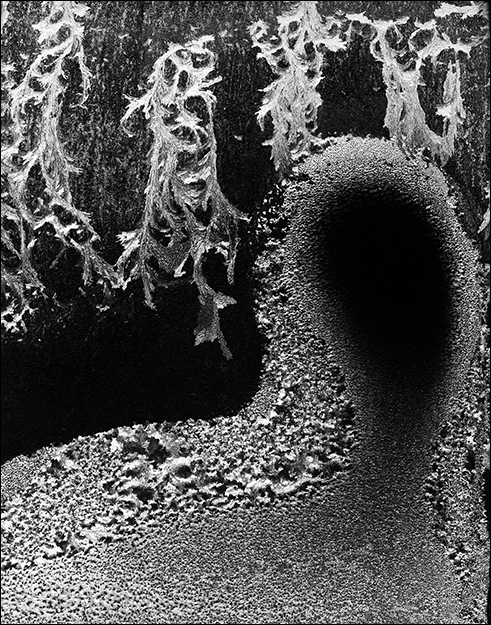 Figure 6.1 © Minor White. Empty Head, 1962. 9 1/4 x 7 1/4 inches. Gelatin silver print.
Julia Marget Cameron (1815 – 1879)
You are known for emotive, soft-focus portraits and allegorical tableaux, which emphasizes beauty, divinity, truth, and the moral dimension of the photographic act. What are your thoughts regarding this “new photography” that can conjure images without light, subject, or soul?
Indeed, I have been watching. To make an image without light, without subject and without soul? That is not photography, rather it is the shadow of a dream, cast by nobody. My lens sought the presence of the sitter, the pulsating of the eternal within the mortal face. I welcomed blur, not as failure, but as revelation of the divine; for only in imperfection is there evidence of grace. Through cracks, dust, and even my fingerprints, my photographs revealed the eternal in the face of the living. Beware of an invention that leaves the dust behind. Photographs that do not elicit sensations are but an empty veil.
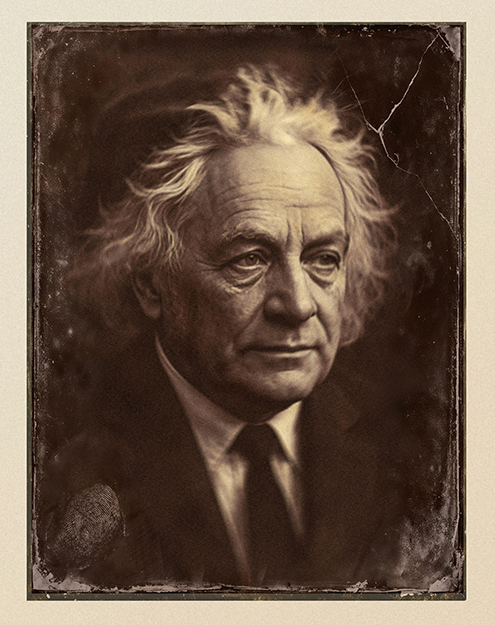
Figure 6.2 Julia Marget Cameron (AI). Sir John Hershel and Richard Feynman, 2026. Dimensions vary. AI-generated digital image (text-to-image), created using OpenAI image model (DALL·E) and Photoshop, prompt and direction by Robert Hirsch & Edward Bateman.
William Mumler (1832–1884)
Your name is associated with spirit photography. While you were acquitted at your fraud trial, most believe that you used photographic trickery to deceive people with your spirit images. AI can create images with disembodied content. What is your perspective now?
Ah… How fitting that I should be summoned in this particular moment. The boundary between the visible and the invisible has once again grown porous as people still reach for images to hold what cannot be touched. You say “trickery,” and perhaps that’s fair. But, let me remind you: I offered people a glimpse of what they desperately wished to see. Grief needs a form and I gave it one. They said I tricked the camera, but the camera is a trickster by nature. It always withholds as much as it shows. I merely guided what was already latent. What difference is there between my glass plate and your generative prompt? In both, the subject may be absent, but the desire is very real. The question remains: do people believe because they are fooled, or because they want to believe? In my day, the image of a departed loved one in the background could heal or reopen a wound. So, I say: ghosts never needed cameras, only someone willing to look.
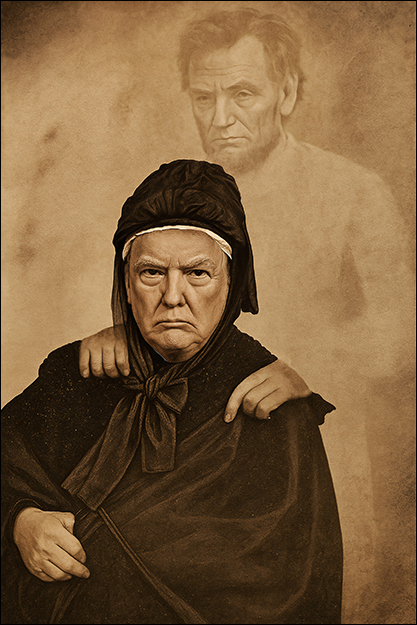 Figure 6.3 William Mumler (AI). Presidents Abraham Lincoln and Donald Trump, 2026. Dimensions vary. AI-generated digital image (text-to-image), created with OpenAI image model (DALL·E), prompt and direction by Robert Hirsch & Edward Bateman, 2026.
Alfred Stieglitz (1864 – 1946)
You did much to advance photography in America as a fine art. Even your own definition of photography changed, from Photo-Succession to your modernistic Equivalents. How might AI change photography?
Change is inevitable. I saw many changes pass through my galleries; some revolutionary, but that always passed. What mattered always was expression. A photograph, whether of Georgia (O’Keefe’s) hands or of clouds, had to speak from one’s inner life outward. That was the point, not mere record, but discovering revelation.
So now you ask me to consider AI. It troubles me, not because it is synthetic, but because it is so often shallow. Accommodating, dazzling, fast, and slick, yes. But what does it demand of its maker? Where is the discipline? Where is the struggle to see distinctly? The silent waiting before pressing the shutter at the precise moment.
Still, I would not dismiss it. I have fought too many battles for photography to simply become a reactionary. If someone finds a way through AI to make something true, something felt, then let them. However, if it becomes merely illustration, decoration, ephemera, then it will not last. Art does not arise from convenience. It arises from the necessary struggle of the maker.
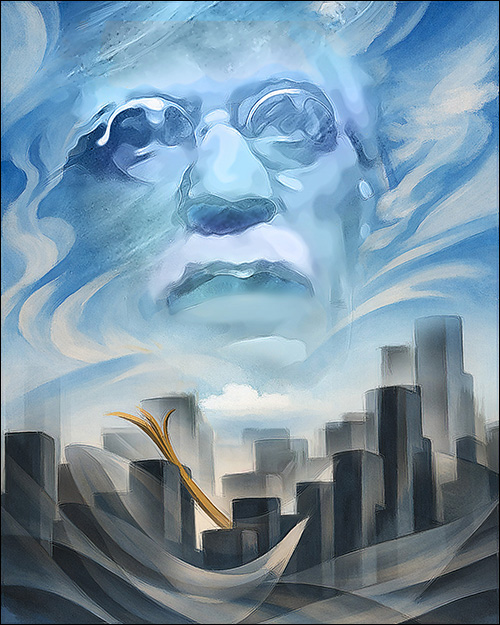 Figure 6.4 Geogia O’Keefe (AI). Alfred Stieglitz and New York Skyline, 2026. Dimensions vary. Photoshop-generated digital image, with additional modification using OpenAI image model (DALL·E), prompt and direction by Edward Bateman, & Robert Hirsch, 2026.
Weegee (Usher/Ascher Fellig) 1899—1968
You were the (self-proclaimed) World’s Greatest Photographer whose journalistic images were collected by the MoMA. Would you use AI today?
I’d still be the world’s greatest photographer, with a camera or a computer. It don’t matter cuz I got the eye. Might as well make a few bucks while waiting for the next murder.
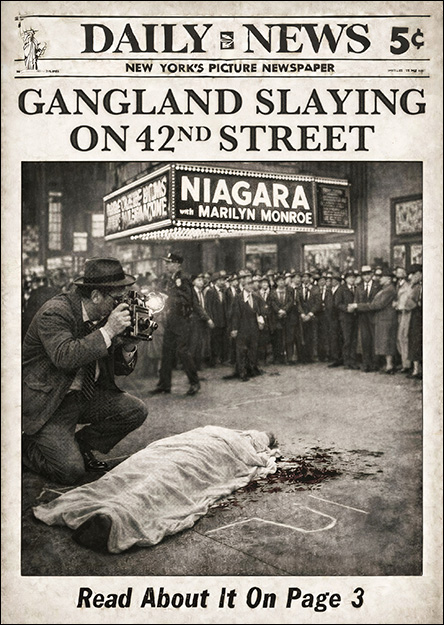 Figure 6.5 Weegee (AI). Gangland Slaying on 42nd Street, New York, 2026. Dimensions vary. AI-generated digital image (text-to-image), created using OpenAI image model (DALL·E) and Photoshop, prompt and direction by Robert Hirsch & Edward Bateman.
Man Ray/Emmanuel Radnitzky (1890 – 1976)
Your rayographs demonstrate how you experimented with photography. What do you think about using AI to make photographs? Also, have you talked with Marcel Duchamp about AI?
Ah, finally, someone asks the right question! You must understand, I never thought of myself as just a photographer. The camera was a tool, but so were shadows, glass, heat, and accidents. AI? Why not? It’s simply another way to challenge assumptions, upset habits, and flirt with surprise. One should never pass up an opportunity for flirting! I made rayographs by placing objects directly on photographic paper and letting light perform a little magic. Is AI so different? You feed it fragments: words, references, bits of memory and it conjures up something unexpected. That’s not far from surrealism, my dear. It’s just that the darkroom is now inside the machine. People still expect photographs must come from cameras. I never cared for that notion. What matters is the spark. A flash in the brain, not from a bulb. If a tool lets you get that faster, use it. But don’t confuse surprise with art.
I’ve spoken with Marcel, of course. He thinks it’s a bore. But he said that about most things until he quietly stole them. He claims he’s teaching AI to make a piece so boring it disappears entirely. “Pure absence,” he says. Then he laughed. So yes, we’re working on something. But we’ll probably just throw it away when we’re done.
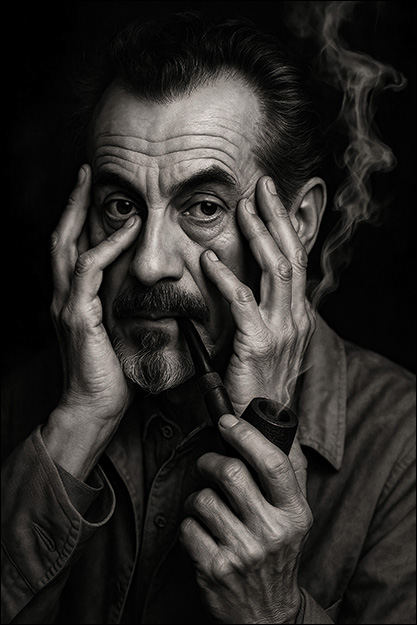 Figure 6.6 Man Ray (AI). Man Ray and Marcel Duchamp, 2026. Dimensions vary. AI-generated digital image (text-to-image), created using OpenAI image model (DALL·E), prompt and direction by Robert Hirsch & Edward Bateman.
Diane Arbus (1923 – 1971)
Your photographs of marginalized people put you decades ahead of the social curve. Does AI belong on that photo curve?
Let me mix one of my own quotes up with something that Garry (Winogrand) said: “I photograph to see what my fear looks like.” [4] Is that a mixed metaphor? I photographed what people tried not to see. AI makes things we want to see. There’s a difference. With AI, I worry we’re building images without the risk of looking. No fear, no vulnerability, no permission. If it can make you feel like you’re looking too closely, like you’re seeing something not meant to be seen, then maybe it’s getting close. But I’m not sure it wants to. It would have to learn how to stare first.
Lee Miller (1907 – 1977)
You were a surrealist, war correspondent, and photographic innovator, who navigated modernism, myth, propaganda, and trauma. You photographed the German concentration camps at Dachau and Buchenwald, what guided your hand: art, duty, or something bleaker?
None of those words feel quite right on their own. I made photographs at Dachau and Buchenwald to keep from screaming. The camera was my witness, my shield, my scalpel, and my confession. You don’t make art in a place like that, you make evidence. Every frame was a refusal to let the world forget. I wasn’t searching for beauty; I was recording the failure of civilization in the language it couldn’t deny: the image. I photographed out of fury at what was in front of me. I refused to look away, and it broke me. What angers me now is that images can be made without ever being punched in the gut by what you see. If there’s no slap in the making, there’s no weight in the seeing. And that makes forgetting way too easy. If a machine can honestly do that, then maybe they will earn the right to make images.
Ansel Adams (1902 – 1984)
You knew that digital photography was in development and expressed an excitement about it. We now have AI, which some might consider the ultimate “pre-visualization” tool. What do you think? What has your friend Edward Weston said to you about AI?
Well, let’s not confuse pre-visualization with prediction. People often thought it meant planning every detail, but what I truly meant was having a clear intent in being able to visualize the final print as you stood before the scene. It was never about rigidity, but about intention and mastery. I stood before a mountain and knew how I wanted it to feel as a print. Not just what it looked like, but what it could become in the darkroom. The Zone System was never intended to be a constraint, but a language for rendering vision into black-and-white tonality.[5]
AI is astonishing as it flips the process inside out, but that’s not pre-visualization. There is no light, no waiting for the clouds to open and no negative. It doesn’t ask you to photographically understand a place, just to describe it. Still, if it helps someone express something true, then who am I to scoff? However, if it’s only spectacle without heart… well, then it belongs in the circus and not in a cathedral.
Edward [Weston] finds it amusing and says it’s like expecting a typewriter to fall in love with its words. He’s not wrong. But, if someone uses AI to deepen seeing, well, that could be something. But if we lose the patience to see, returning to the same rock over and over waiting for the right light, then we have lost the very essence of the thing itself. [6] And no machine, no matter how clever, can give that back. Although Minor [White] always used to say: “One should not only photograph things for what they are but for what else they are.” [7] You should ask him about that.
Andy Warhol (1928 – 1987)
Andy, if AI can make art, copy your style, and even talk like you, does that mean the machine has finally become you, or that you were already a kind of machine all along?
I don’t care about the words. There are too many words. I just like looking at the pictures.
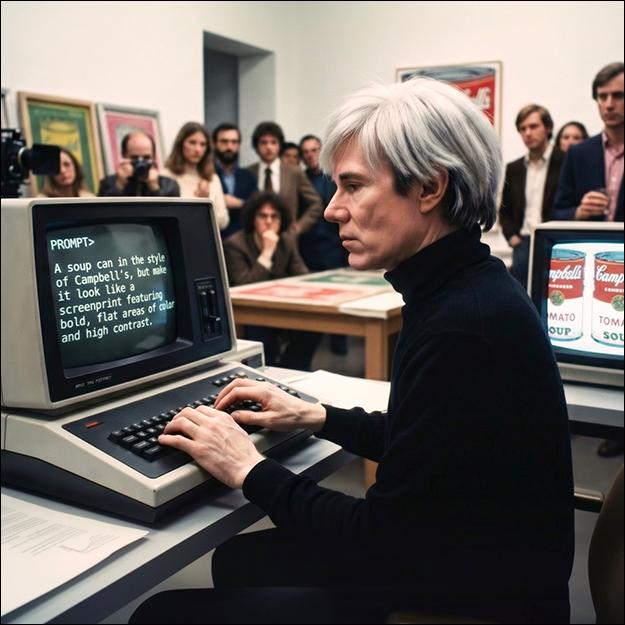 Figure 6.7 Warhol (AI). The Factory, 2026. Dimensions vary. AI-generated digital image (text-to-image), prompt and direction by Kenneth Collins.
The computer monitor reads: “PROMPT> A soup can in the style of Campbell’s, but make it look like a screenprint featuring bold, flat areas of color and high contrast.”
Robert Mapplethorpe (1946 – 1989)
Your provocative photographs expressed beauty, desire, and domination. What do you think now that AI has automated your themes?
Beauty always has a dangerous side. People pretend it’s innocent, but it isn’t. It seduces, it penetrates, it demands dominance and surrender. When I photographed a body, I wasn’t documenting it, I was sculpting with light to reveal what I wanted to be seen and what I wanted to stay hidden. That tension, between disclosure and resistance, is what made it erotic and freaked people out.
AI can fake the surfaces I loved: skin like marble, poses balanced on the edge of control. But there is no tension or that prick of nervous sweat. No ache of wanting something dangerous or the thrill of making beauty obey. My work was never just about form; it was about the power beneath it… sex, ritual, pride, and shame. Boredom is the death of desire. With AI, there’s no real heat in the room.
Gordon Parks (1912 – 2006)
You used the camera to give dignity to people whom America marginalized. Now that AI has put a gaping hole in photographic veracity, how can one make meaningful images in a world where seeing no longer guarantees believing?
My camera was a weapon against injustice, poverty, racism, and silence. What mattered was that the people I photographed were real and that I saw them fully. If you take away the substance behind the image, you risk losing the humanity too.
Now that you’ve got machines that can mimic reality, people don’t know what to believe. That’s dangerous. But, it also means the artist has to do more than just depict. They have to stand for something bigger than themselves. An image alone won’t cut it. What matters more than ever is intention and integrity. You don’t earn trust with pixels. You earn it by caring. By standing up for something. And by choosing to show what’s real even when it’s not what people want to see.
That’s why the image still matters. You must deeply mean it. When I photographed Ella Watson holding that broom and mop in front of the American flag, I wasn’t inventing her struggle, I was standing there with her. A machine can copy my style, but it can’t understand what it meant to grow up hungry, to ride the back of the bus, to walk into Life magazine knowing I was the only Black man in the room with a camera. That understanding shaped every frame I ever made.
Robert Frank (1924 – 2019)
Robert, much of your work, especially The Americans, [8] was driven by a restless, questioning eye. Can AI see any subject with such discernment?
I don’t believe a machine can look and it can’t move around and see. The Americans came from driving across the US, feeling its weight, watching lives unfold, often in quiet, overlooked corners. In The Americans, I was responding to what was, the difference between the Great American Myth and the reality. Harsh or not, that didn’t matter. AI invents out of who-knows-what, but it’s all surface: No grain, no blur, and nothing raw. That stuff only matters to someone who cares.
The camera was my conscience. I exposed my own discomfort, loneliness, sadness, and love; something a machine is blind to. AI images don’t belong to this world, so what’s the point? Where’s the humanity? When a country can no longer stand to look at itself, maybe it’s dead and books like The Americans will cease to exist.
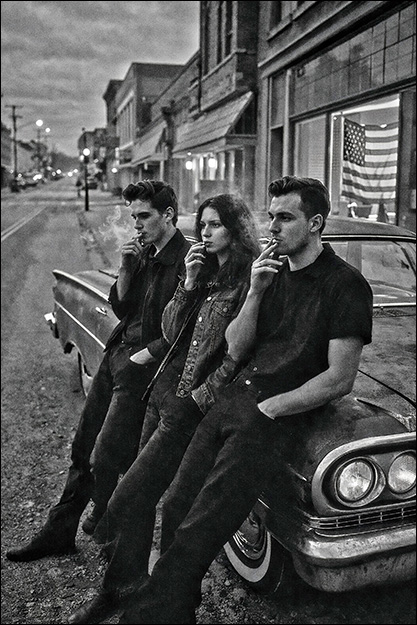
Figure 6.8 Robert Frank (AI) Main Street, USA, 2026. Dimensions vary. AI-generated digital image (text-to-image), created using OpenAI image model (DALL·E) and Photoshop, prompt and direction by Robert Hirsch & Edward Bateman.
Jerry Uelsmann (1934 – 2022)
Your surreal darkroom creations brought back the combination printing of Oscar Rejlander and Henry Robinson. You tried an early version of Photoshop, but returned to your darkroom. As a former teacher, what would you suggest for today’s young photographers regarding AI?
Ah, thank you for asking. I’ve always believed the darkroom was a place for discovery, not just execution. It was never about what was there—but what could be. So when Photoshop came along I gave it a spin. However, I didn’t fall in love with it. Not because it was digital, but because it answered too quickly. I liked not knowing how a print would turn out. That was where the poetry lived.
Whether you’re dodging and burning under an enlarger or prompting a machine, what matters is the intention, the curiosity, the willingness to follow an idea somewhere surprising and maybe a little uncomfortable. If AI helps you find something you didn’t expect—great. But if you’re just making glib illusions with no soul behind them, you’re not making art. You’re making decorations. And remember: accidents are still sacred. Whatever the process, leave room for the image to become smarter than you.
 |
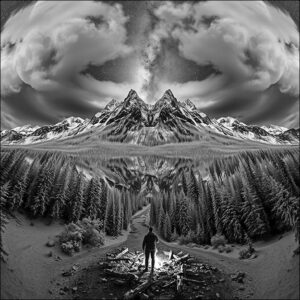 |
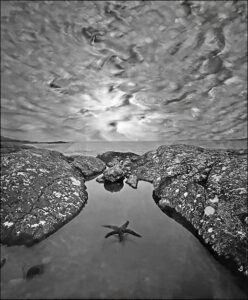
Figure 6.9 © Jerry Uelsmann, Untitled, 2002. 10 1/4 x 12 1/4 inches. Gelatin silver print.
Figure 6.10 Jerry Uelsmann (AI), Untitled. Dimensions vary. AI-generated digital image (text-to-image), created using OpenAI image model (DALL·E), prompt and direction by Edward Bateman & Robert Hirsch.
In light of his conceptual linkage between the photograph and death, we felt it appropriate to conclude with a response from the noted literary theorist, semiotician, and essayist, Roland Barthes.
Roland Barthes (1915 – 1980)
Your respect for photography is revealed in Camera Lucida (1980). The majority of the photographs you included were historical or documentary opposed to fine art. Does AI make your concept of “studium” [9] irrelevant or just different? Can an AI image still have a “punctum” [10] ? Does AI change the relationship between a photograph and death?
Camera Lucida was for me as much a meditation on mourning the passing of my mother as it was about photography. AI cannot mourn. Its images do not witness. They arrive with no origin, a nonentity that lacks emotional connection. And so I find myself disoriented, like a ghost trying to read its own obituary.
In photography, the studium drew strength from its shared connection to culture, history, and politics. In AI, this collapses. It gestures toward meaning, but cannot hold it. Yet even so, the illusion of studium may remain, because there are always things to observe with our rational minds. So perhaps the studium is not irrelevant, but spectral. It flickers. That, I must admit, is very human.
I believe punctum can occasionally survive. An AI image that personally pierces an individual is able to tap into something that already aches inside the viewer. It is not the wound of what was, but perhaps the wound of what could never be. It touches what hurts, but not what happened. A face that doesn’t exist can still look like your mother before she died. Maybe that is enough?
But this is not photography’s death, it is photography’s forgetting. The photograph, for me, was aligned with death: it says this has been, and therefore this is gone. AI removes that sequence of natural events. It shows us things that never were and therefore never die. The image is born without pain. It offers us a world without decay or memory. Perhaps the opposite of mourning. I am left to wonder… if there is no death, is there still desire?
Conclusion
Regardless of the camera, process, or approach, each of these photographers made images that were unmistakably their own: not because of the tools, but because of their human experiences behind them. Changes in art are rarely spontaneous, but are driven by shifts in culture and technology. [11]
AI is not the death of photography any more than the camera was the death of painting. It is the latest force to reshape how images are made, circulated, and believed. [12] As psychologist Dan Gilbert explains, humans are notoriously bad at predicting how change will affect us. We tend to suffer from what he calls impact bias: overestimating the long-term consequences of new events, especially disruptive ones. [13] Perhaps that’s why so many worry that AI will hollow out photography, strip it of meaning, and/or make human hands irrelevant. Yet photography adapted, and meaning shifted away from tools toward intention, context, and responsibility. But meaning has never lived in the tool. It lives in the maker’s struggle, curiosity, restraint, and willingness to be accountable for what an image does in the world.
Shakespeare gives us a prototype for this moment. In The Tempest, Ariel is a dazzling, invisible force that can stage storms, scatter bodies, whisper in ears, and persuade anyone of anything—depending on who holds the book of spells. AI now occupies a similar position in photography: it can summon style, simulate presence, even ventriloquize the dead, while tempting us to outsource responsibility to the machine. The real question is not whether the spirit is “real,” but who is doing the summoning, to what ends, and who answers when the illusion persuades.
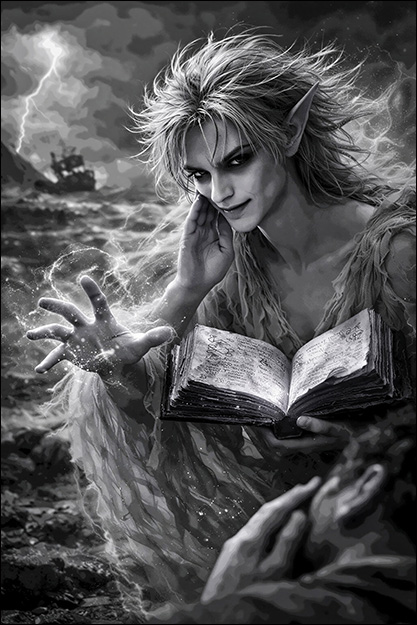 Figure 6.11 Ariel (after William Shakespeare’s, The Tempest). Dimensions vary. AI-generated digital image (text-to-image), created using OpenAI image model (DALL·E), prompt and direction by Robert Hirsch & Edward Bateman, 2026.
Barthes observed that this is not photography’s death but photography’s forgetting of images “born without pain,” untethered from this-has-been, and therefore too easy to consume without consequence. Technologies change; human nature does not. It can manufacture persuasion without the burden of seeing, simulate voice without the weight of witness.
What unites these photographers across generations, and beyond death, is authorship: a commitment to look clearly, to risk something, to earn the image, and to answer for it. The soul of photography cannot be conjured. It must be claimed.
ROBERT HIRSCH
To contact the authors got to their websites
ROBERT HIRSCH. www.lightresearch.net
EDWARD BATEMAN http://www.ebateman.com
Endnotes
[1] Minor White, Mirrors, Messages, Manifestations (New York: Aperture, 1969), 22.
[2] As this article points out, photography’s ability to manipulate reality is not a new concern. See: Louis Anslow, “America tried to ban fake photos in 1912,” Freethink, June 4, 2025, www.freethink.com/the-digital-frontier/fake-photo-ban-1912
[3] Edison stated: “I have been at work for some time, building an apparatus to see if it is possible for personalities which have left this earth to communicate with us…” Several sources discuss his interest in building a so‑called spirit phone that would pick up “voices of the dead” or subtle “etheric” influences. Today’s ghost hunters continue in this tradition of using technology through Electronic Voice Phenomenon (EVP) which claims that ghostly voices can be heard in static. See: Austin C. Lescarboura, “Edison’s Views on Life and Death: An Interview with the Famous Inventor Regarding His Attempt to Communicate with the Next World,” Scientific American 123, no. 18 (October 30, 1920): 446, 458–60, https://doi.org/10.1038/scientificamerican10301920-446
[4] Garry Winogrand stated: “I photograph to see what something looks like photographed,” quoted in John Szarkowski, Winogrand: Figments from the Real World (New York: Museum of Modern Art, 1988), 8.
[5] Zone System, co-developed by Ansel Adams and Fred Archer, is a photographic method that divides tonal values from black to white into a calibrated scale, allowing photographers to pre-visualize and precisely control exposure and development so that the final print matches their intended tonal relationships.
[6] In Weston-and-Adams terms, “the thing itself” is the subject’s essential form made visibly irrefutable, through sharp seeing and disciplined craft, so the photograph reads as a direct encounter rather than a Pictorialist effect.
[7] Minor White, “Equivalence: The Perennial Trend,” Aperture, no. 1 (1952): 8–9.
[8] Robert Frank’s The Americans was first published in 1958 (in France, as Les Américains). The first U.S. edition followed in 1959 (Grove Press, with an introduction by Jack Kerouac).
[9] Studium is the conscious, rational observation of a photograph. It is what you’re supposed to notice in a photograph: its message, subject matter, setting, historical context, style, what it’s “about.”
[10] Punctum is the individual, unconscious, and non-rational response to a photograph. It is the little thing that gets you: the sting of a photograph. A detail that unexpectedly grabs your attention and hits you personally: emotionally, viscerally, weirdly. It might be small, such as a hand, a scuffed shoe, a glance that someone else might not feel it at all.
[11] For more information see: Ernst Gombrich, ‘Style’ from International Encyclopedia of the Social Sciences 15 (Macmillan, New York 1968).
[12] Matt Growcoot, “Photography Has Always Had its Tricksters,” PetaPixel, Feb 10, 2026, https://petapixel.com/2026/02/10/photography-has-always-had-its-tricksters-rijksmuseum/
[13] Impact bias explains why we repeatedly believe new technologies will permanently transform our lives in a detrimental way; when, in fact, humans adapt faster than they expect. See: Dan Gilbert, Stumbling on Happiness (New York: Alfred A. Knopf, 2006), esp. chap. 10, “The Forecasting Error.”